
Pillow Materials Compared
Fill decides how a pillow feels, how long it holds its shape, how warm it sleeps and how much maintenance it needs. It is the fourth decision, not the first.
By the Somnora editorial team · Last updated September 1, 2026
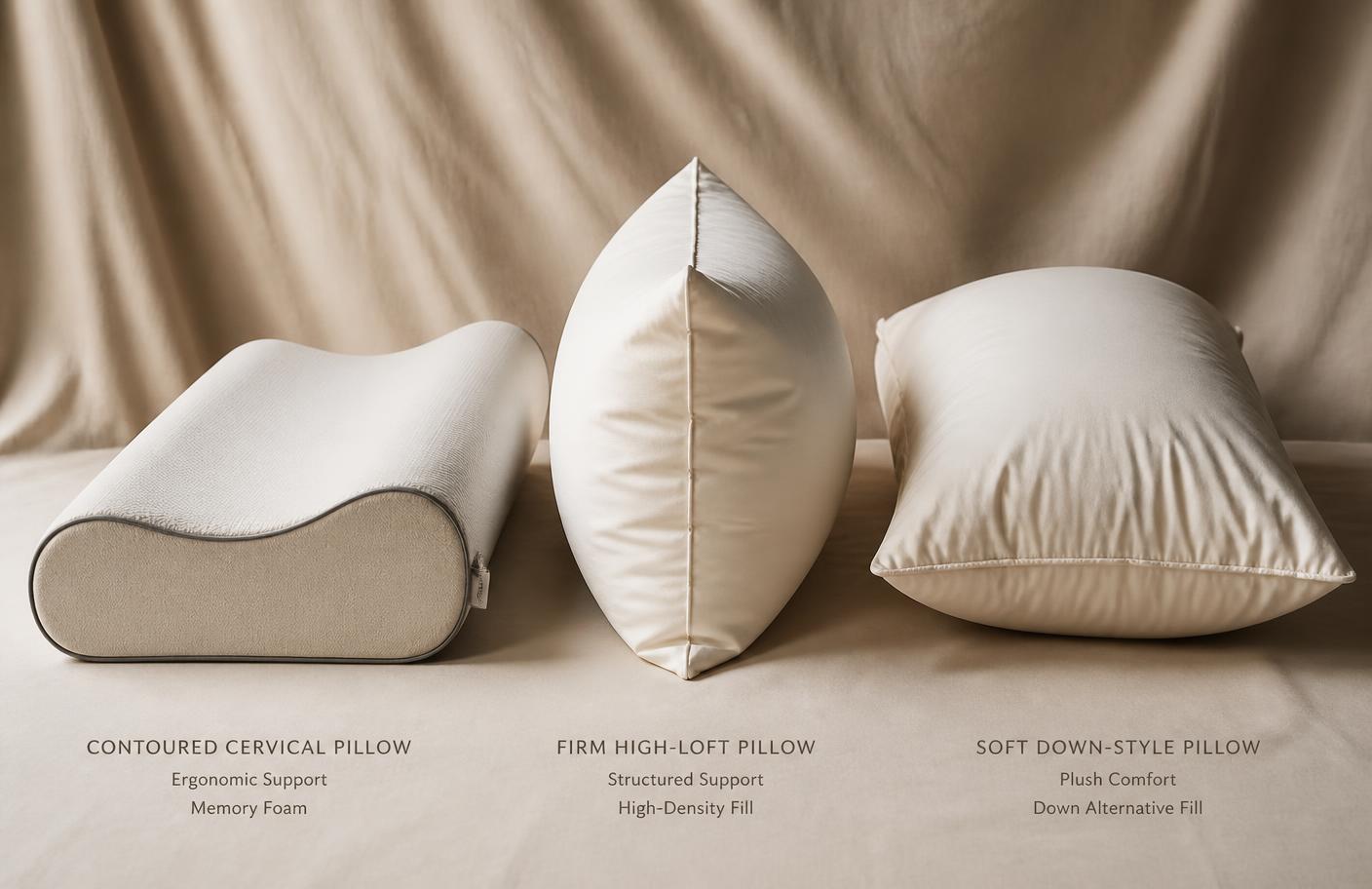
The main fills at a glance
| Fill | Support | Heat | Maintenance | Typical lifespan |
|---|---|---|---|---|
| Solid memory foam | High and consistent | Warmest of the group unless ventilated | Cover washing only | Long, if density is decent |
| Shredded memory foam | Medium-high, adjustable | Better airflow than solid | Occasional redistribution | Long |
| Latex | High, springy response | Cooler than solid foam | Cover washing only | Long |
| Down | Low | Warm | Regular fluffing; specialist cleaning | Long with care |
| Down alternative / polyester | Low to medium, drops quickly | Moderate | Often machine washable | Shortest |
| Buckwheat | High, very firm and mouldable | Cool | Hull top-ups; heavy | Long |
| Hybrid (foam core + fibre top) | Medium-high | Depends on core | Cover washing | Medium to long |
Heat, and what "cooling" usually means
Cooling in pillows usually comes from one of three places: ventilation holes or channels in a foam core, gel or graphite infusion, or a knit cover fabric that feels cool to the touch. Surface feel is genuinely affected; sustained overnight temperature claims are harder to verify and should be treated as manufacturer claims unless testing is published.
Allergies, washing and hygiene
- Most foam and latex cores cannot be machine washed — a removable, washable cover matters more here than elsewhere.
- Down alternative pillows are often fully washable, which is why they are common in guest rooms.
- A pillow protector under the case extends usable life regardless of fill.
- If you have a latex allergy, avoid latex pillows and check hybrid constructions carefully.