
Cervical Pillows
Contoured pillows build the head-and-neck height difference into the foam itself. That is their advantage and, when the shape does not match you, their limitation.
By the Somnora editorial team · Last updated September 1, 2026
The shape, and why it exists
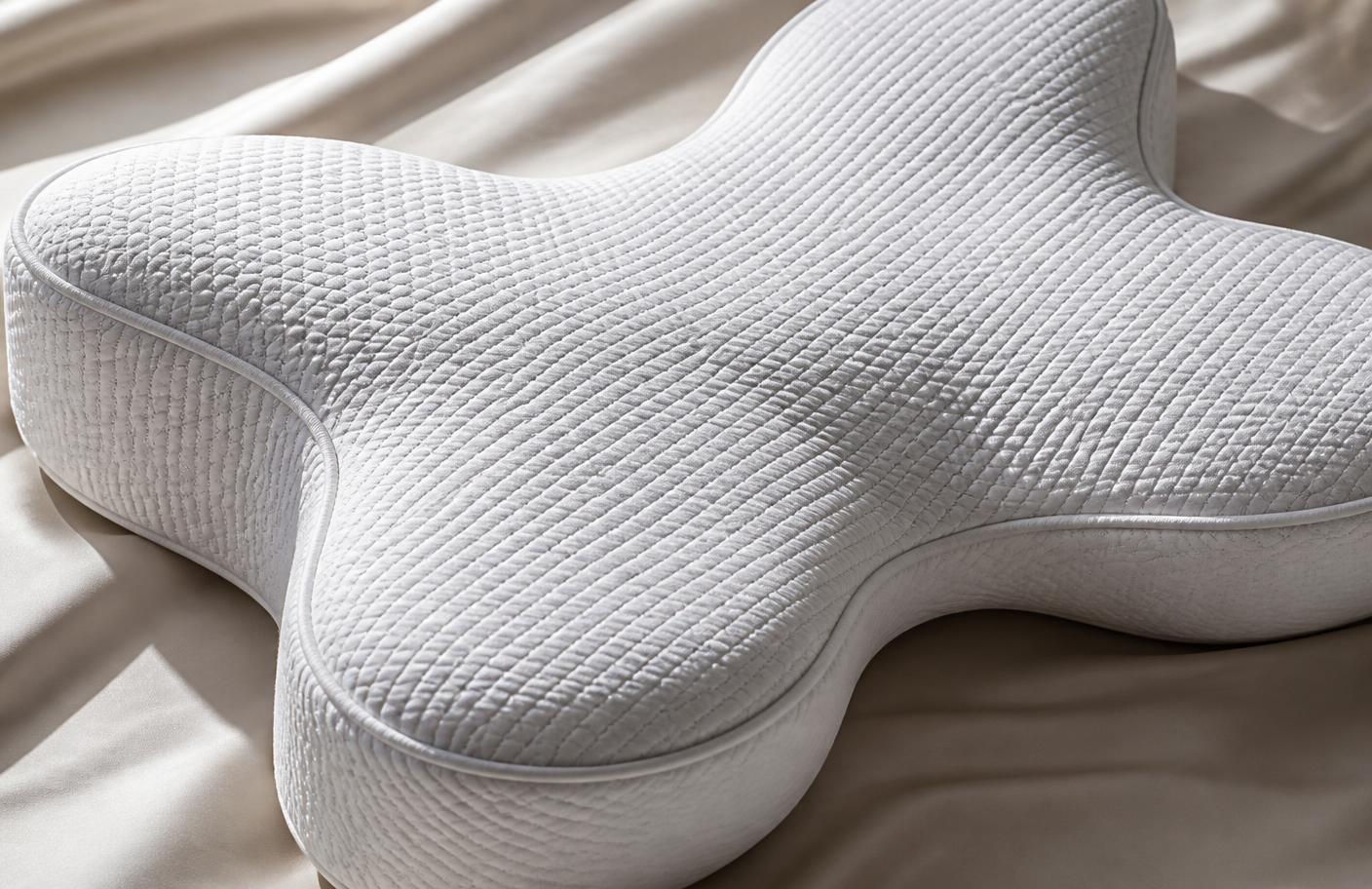
On a flat pillow the neck is often the least supported part of the head-and-neck unit. The cervical profile inverts that: the thickest section sits under the neck, and the head settles into a shallower area behind it.
What to check before buying
- Contour height. Many contoured pillows publish two heights — one for the higher edge and one for the lower. Match the one you will actually sleep on.
- Foam density and response. Slow-recovery memory foam holds shape but can feel firm in a cold room; latex responds faster.
- Cover material and whether it can be removed and washed.
- Overall dimensions, since contoured pillows are often smaller than a standard pillow and may not fit a standard pillowcase.
- Return window, because a fixed shape either fits or it does not.
Who it suits
- Back sleepers who feel a gap under the neck.
- Side sleepers with a matching shoulder width, especially on winged designs.
- People tired of re-fluffing and re-folding a soft pillow every night.
Who may not suit it
- Stomach sleepers — see stomach sleeping.
- Very restless sleepers who leave the contour entirely during the night.
- Anyone whose neck length and shoulder width fall outside the shape's intended range.
What is a cervical pillow?
A pillow shaped with a raised roll for the neck and a lower hollow for the head, so the neck stays in contact with the pillow rather than bridging a gap.
Are chiropractic pillows different?
"Chiropractic pillow" is a marketing term rather than a defined product class. In practice these are contoured cervical pillows; the description does not imply clinical validation.
How long do they take to get used to?
Many people report an adjustment period of a few nights because the shape is fixed. If a pillow still feels wrong after a couple of weeks, it is probably the wrong geometry for you — which is why return terms matter.